Body Image on a Broken Leg
(8 Minute Read)
I’m writing this from my bed and current makeshift office in the weeks following a major orthopedic trauma surgery after a complete tibia and fibula fracture sustained during a rugby game.
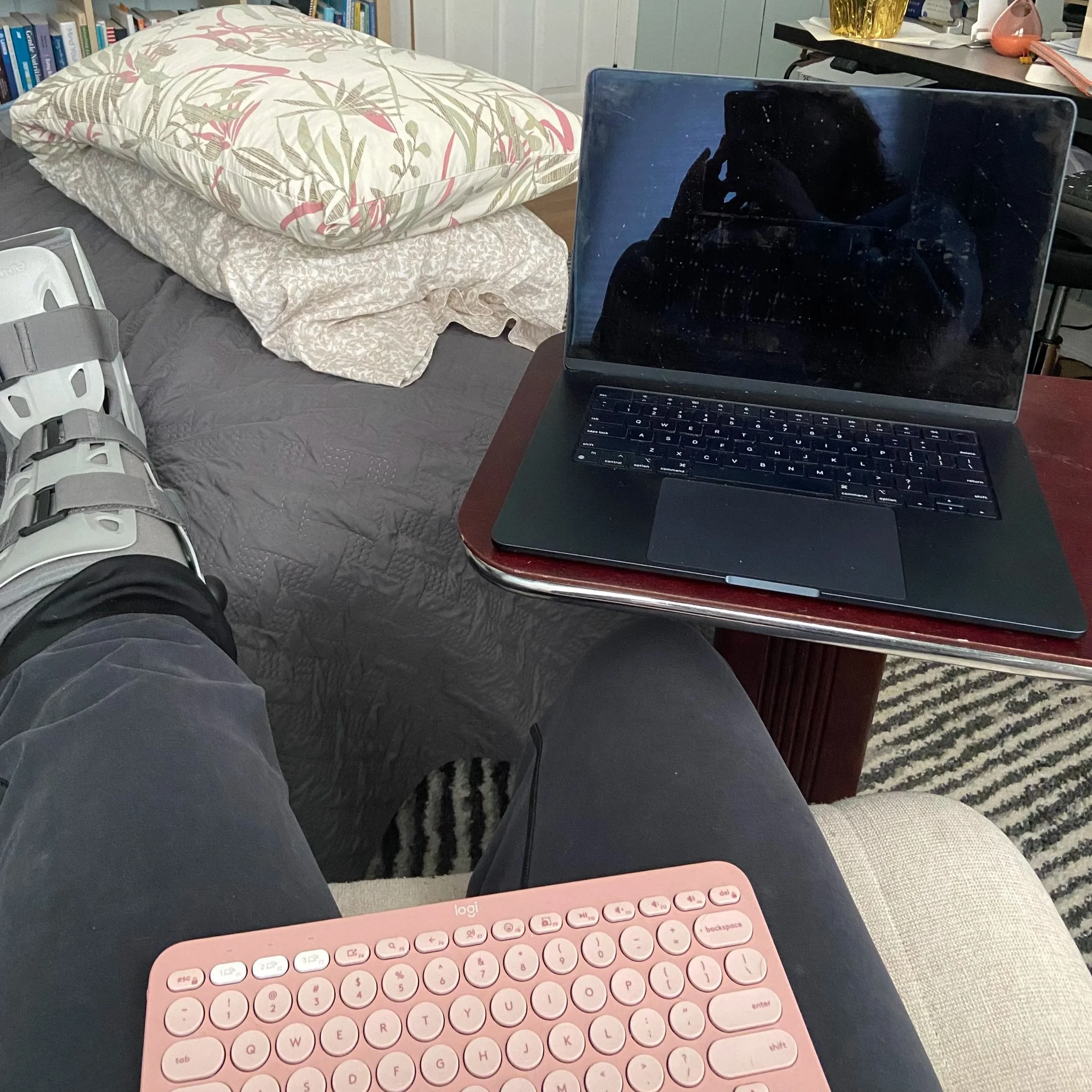
I’ve been sitting with the surprising ways in which my own body image repair has surfaced through this injury. I’m going to share the same tools and skills I have helped hundreds of clients with as a dietitian specializing in eating disorders and sports nutrition, and can now say that they held up during my own body image disruption.
It’s one thing to talk about body image, it’s another to put to the test the mindset shifts that I’ve been living through experiencing a “body betrayal”.
From “my body as an adversary” to “my body as an ally”
Before I had learned about body image resilience, I was very familiar with the idea of feeling like my body was letting me down. I constantly felt like I was at war with my body, fighting a hunger that I never felt in control of. It was a cycle of ignoring and avoiding the signals from my body because I felt that I knew better, even if my body didn’t. I followed plans and rules because my body was not to be trusted.
Through the process of relearning to listen to and trust my body, I began to feel more in union with it. If I were able to anticipate my body’s needs, I was no longer dealing with the aftermath of being underfed, overtired, or overstressed.
Once I became more consistent in showing up for my body, I was able to receive consistent signals and cues. Over time, I began to build a bridge between my mind and body, until I finally realized that they were not separate at all. I learned that I cannot outsmart my body and it has a wisdom that needs to be heard.
A core component of positive body image is respecting your body’s needs and responding to them. Building this foundation of trust made it easier to see that my body and I are together in this; facing a traumatic event, my body suffered, but given enough nutrition, time, and rest, she will literally heal herself.
I needed to befriend my body to access this perspective.
The Identity Shift
Through injury, there are many ways that an athlete suffers. One, through the experience of the injury itself: Pain. Surgery. Prognosis. There is also a secondary loss– the loss of identity as an athlete.
I’m also sure you’ve heard that valuing your body for what it can do vs. what it looks like can create a positive shift in body image.
I would argue that the dangerous perspective is when one’s value of self is tied to a single identity or outcome. An overvaluation of what your body can do, what it looks like, and even your values can make you more vulnerable to a disruption.
Leading into that fateful game, I was playing some of the best rugby that I’d ever played. I was the fittest, strongest, and fastest I’d ever been. Despite this, my sense of self was not reduced to my numbers at the gym. Sure, I valued the results of hard work and getting stronger, but I felt that I was able to practice and live these values in other ways, too.
Something I often tell clients is that body size and shape can be under a lot of pressure when we see it as the sole value we bring to the world. The same can be said of our productivity, physical abilities, and health status. If any one of these falters and you haven’t taken the time to diversify, then it can feel like the floor is dropping out from under you.
If your self worth is a house, let it be a mansion with many rooms instead of a one-room cabin.
The Role of Radical Acceptance
Body image in general can be quite complex; yes, it’s how we see and feel about ourselves, but it’s also how we act in relation to our bodies. In my practice with clients, we work to influence body image through any one of these avenues.
Often with clients, I see the behavior towards their bodies as a way to express emotions that we don’t yet have the words for. They can manifest physically as well, such as through perceptions of heaviness, “feeling fat”, or disgusted with oneself.
The problem? Society at large tells us that if you feel this way towards your body, you’re under obligation to make it go away.
Unfortunately, this general attitude towards uncomfortable feelings robs us of the opportunity to respond to what these signals are telling us.
It’s rare that I have urges to change my own body, but early in the season when I first started practicing with my now team, I really wanted to fit in and be liked. Briefly, the thought crossed my mind that if I lost weight, I might be faster and that would help me to bring value to the team.
Rather than jumping on the bandwagon, I took a beat and asked myself: what would losing weight really accomplish? I arrived at the root cause of wanting to be accepted and liked and feeling a little uncomfortable being a rookie again. This is something I can tend to.
Practicing Radical Acceptance means acknowledging that we don’t have control over how others perceive us and the potential pain and difficulty in not being accepted (we are humans, after all!). It doesn’t jump to “fix”. Jumping to a diet plan would absolutely have helped me feel like I was doing something, but it wouldn’t actually allow me to see my experience and emotions for what they were.
Radical acceptance also reduces suffering in navigating body changes because it allows what is in this very moment.
The flip side of acceptance is grief, a letting go of an alternate reality. If you’ve already done this work around letting go of the dream body fantasy, it becomes more natural to roll with the punches of change– important, because bodies change, whether through illness, aging, childbearing or otherwise.
At this moment, I’m navigating less independence and a very limited capacity. I’ve watched my quads and calf muscles shrink in record time due to surgery and immobilization. At the same time, I accept that this is my current reality despite the years I’ve put into building stronger legs and pride in my athletic ability while also attending to the grief and pain that comes with an injury.
Body Image Resilience
Despite the common narrative that reduced activity levels = reduced energy demand, a healing body requires a ton of energy! Energy needs can go up quite a bit following injury, even if the majority of time is spent in bed.
Much of the language around recovery nutrition is around preventing weight gain and emboldens the fear and anxiety many athletes face around their bodies changing after injury.
Eating following a major surgery can actually be incredibly difficult. For the first week, I was totally reliant on others to prepare and bring meals to me. I was exhausted and my appetite was poor. The pain meds I was on also slowed digestion which made eating uncomfortable at times.
If “I better be watching what I eat so I don’t gain weight” was playing on loop in my head, I can promise you that I would not have made the efforts I did to keep eating on a regular schedule.
For me, it’s most important that I am providing my body the care and nourishment it needs right now. Whether or not my body changes doesn’t even really register, because I already have accepted that my body will change and it’s not my job to micro-manage that.
In my own work, I’ve adopted the term Body Image Resilience over Body Positivity and even Body Neutrality (to each their own, pick what works best for you!), but many of my clients strive for Body Image Resilience because they understand that it’s about more than just whether you like your body or not.
It’s the way you show up for your body regardless of how you feel about it. It’s committing to growth and expansion of your relationship with Self instead of falling into old reactive patterns.
Injury has a way of stripping things down to what’s actually there.
Not the version of your body you had last season.
Not the one you were working toward.
Just the one you’re in right now, and maybe it’s a body that can’t perform right now.
And in that space, body image becomes less about how you feel and more about how you respond.
A ship is safe in harbor, but that’s not what ships are built for.
Body image resilience isn’t built in the easy seasons. It’s built in the disruptions, in the grief, in the moments where your body asks more from you than it’s currently able to give back.
Being injured is not a pleasant experience, but it’s allowed me to be wholly present, to lean into my community, and remember what really matters.
I don’t believe I’d be able to see the many gifts it has brought me without having done this work.
Wherever you’re at right now, I’d invite you to pause:
How would I respond to this kind of disruption?
How can I continue to show up for my body, even if my performance falls short?
It’s normal to not be sure, or feel shaky. Body image resilience is a practice that takes patience and time to develop, and I promise you, has been absolutely worth it.
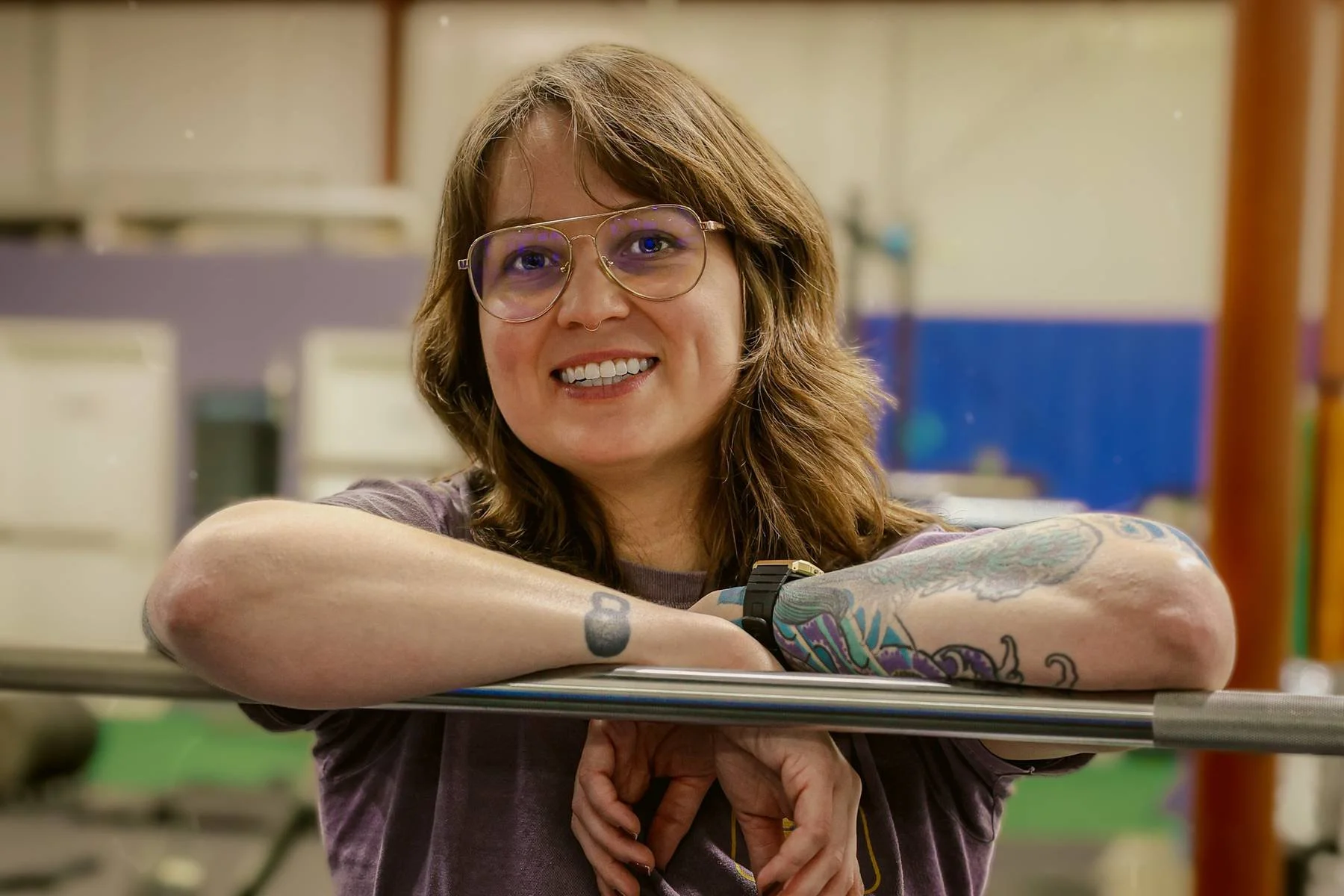
Em Palmerton is a sports dietitian (CSSD, CEDS) who works with athletes navigating performance, disordered eating, and body image. She supports teen and adult athletes, helping them fuel for the long game without compromising their relationship with food or their body. Learn more about her work or get in touch to connect.